What happens in your body?
3. What Happens Inside Your Body?
Imagine your body is a city that never sleeps.
Millions of tiny conversations are happening every second.
Your stomach is talking to your brain.
Your brain is talking to your liver.
Your liver is talking to your muscles.
Your pancreas is trying to keep everything balanced.
Most of the time, those conversations happen so quietly you’ll never notice them.
Until one voice gets too loud.
Sometimes it’s hunger.
Sometimes it’s cravings.
Sometimes it’s the part of your brain that whispers,
“You’ve had a long day. You deserve pizza.”
Or…
“One cookie won’t matter.”
Or…
“Let’s have that Friday night drink. It’s tradition.”
Your body isn’t trying to sabotage you.
It’s simply responding to signals that evolved over thousands of years, when calories were scarce and finding food was essential for survival. In today’s world, those same signals can become mismatched with an environment where food is always available.
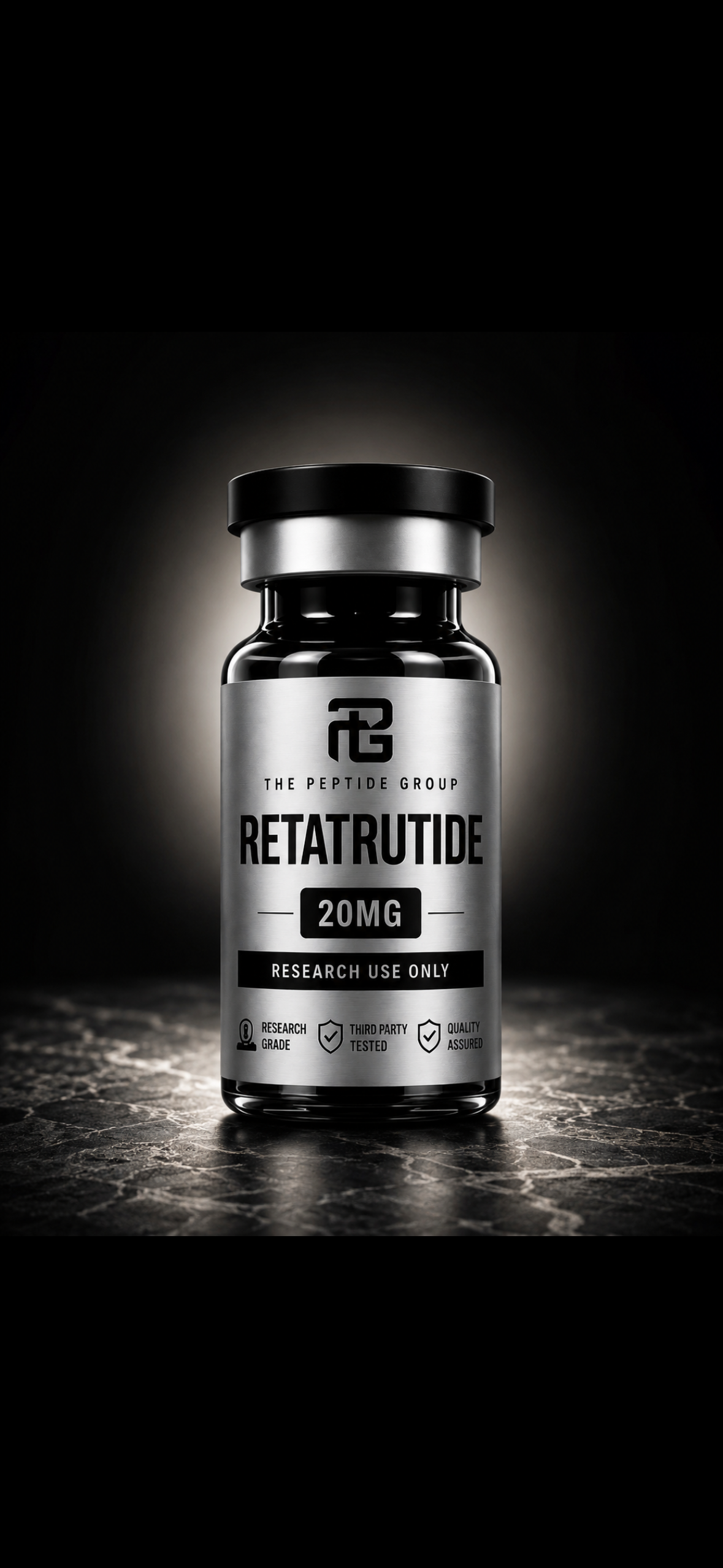
This is where Retatrutide becomes scientifically interesting.
Instead of sending one message, researchers designed it to interact with three different signaling pathways involved in appetite and metabolism.
Think of those pathways as three different radio stations broadcasting at the same time.
One station helps your brain recognize when you’ve eaten enough.
Another influences how your body responds after a meal.
A third is involved in how your body manages and uses energy.
Each station has its own job.
Retatrutide doesn’t replace them.
It communicates with them.
Researchers are still working to understand exactly how these combined signals produce the effects seen in studies, but one idea appears again and again in the scientific literature: metabolism isn’t controlled by a single switch. It’s a network of conversations happening every second.
That helps explain why two people can eat the same meal and have completely different experiences. Biology is a conversation, not a command.
It’s also why some people describe the change not as less hunger, but as less mental noise. Others have reported that the pull toward certain habits, including alcohol, feels different as well. Those observations have sparked scientific interest, but researchers are still studying why they occur and whether they are directly related to these signaling pathways. Experiences vary from person to person.
The pizza still exists.
The cookies still smell incredible.
The restaurant didn’t disappear.
The bottle on the shelf is exactly where you left it.
The world around you didn’t suddenly become healthier.
The conversation inside you may have simply become quieter.
And maybe that’s why Retatrutide has captured so much attention.
Not because it made cookies disappear.
Not because it erased temptation.
But because, for some people, it may have turned the volume down just enough to finally hear themselves think.
The cookies never stopped calling.
The voice just stopped shouting.