The Needle Was a Fork
There was no tourniquet.
No spoon.
No burnt foil.
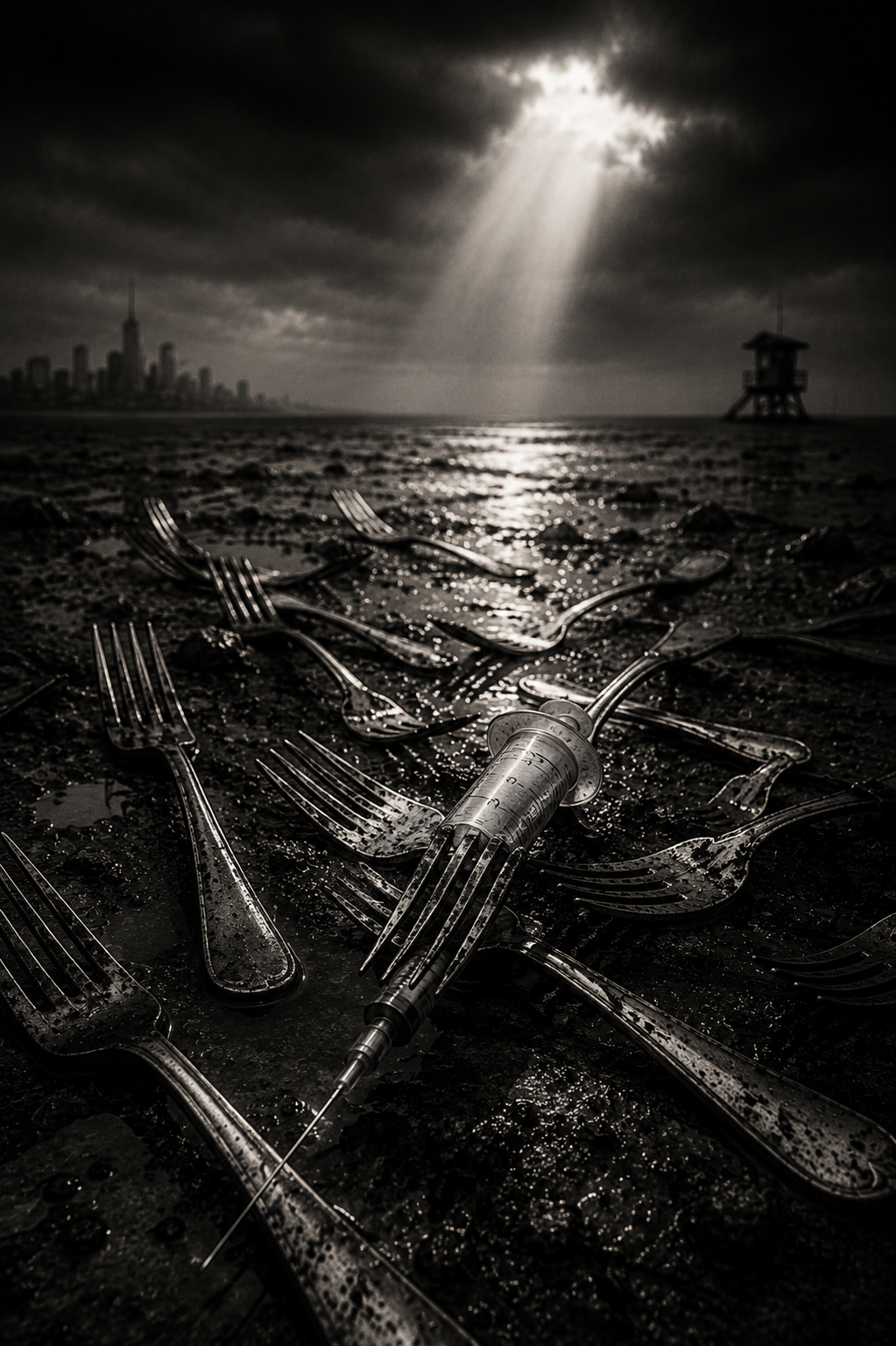
Just a fork in the sink.
That made it easier to pretend.
Heroin had the courtesy to look dangerous.
Food wore a family face.
Birthday cake.
Drive-through fries.
Pasta on Sunday.
A reward.
A treat.
Something made with love.
Nobody called the police because she ate in the dark.
Nobody checked her arms.
Nobody asked where the money went.
It went everywhere.
Delivery apps.
Gas stations.
Grocery stores she entered for milk and left with dessert that weighed more than most newborns.
The receipts stayed folded in her purse.
Long.
Warm.
Embarrassing.
She stopped reading them.
Addicts don’t like inventory.
By ten in the morning she was already planning lunch.
Not because she was hungry.
Hunger was simple.
This was scheduling.
What time could she eat without anybody noticing?
Could she get there before the line?
Could she finish in the car?
Could she throw the bag away before she got home?
The day arranged itself around the next hit.
A meeting at eleven meant food at ten-thirty.
School pickup at three meant something in the cupholder.
A long drive meant snacks.
A short drive meant snacks too.
There were always reasons.
Junkies call them excuses.
Normal people call them errands.
She kept emergency food in places that didn’t need emergencies.
Glove box.
Nightstand.
Laundry room.
Bottom drawer beneath the towels.
A chocolate bar beside the tampons because nobody looked there.
She knew exactly what was in the house.
Not approximately.
Exactly.
Three cookies.
Half a bag of chips.
Two frozen burritos.
One piece of cake hidden behind a container of lettuce nobody planned to eat.
She could forget a birthday.
She never forgot the cake.
When the house got quiet, the craving got loud.
Not dramatic.
No voice from the ceiling.
Just a thought.
Go look.
Then another.
You don’t have to eat it.
Just look.
She would open the refrigerator.
Cold light.
Bare feet.
The hum of the motor.
Sometimes she stood there for ten minutes without taking anything.
That felt like control.
Then she took everything.
The first bite was relief.
The second was permission.
After that it became work.
Chew.
Swallow.
Reach.
Again.
The body would say enough.
The hand would keep moving.
That was the part nobody understood.
They thought she loved food.
Sometimes she hated every bite.
Junkies don’t always love the needle.
They love the second after it.
The tiny space where the world stops asking anything.
Food did that.
For four minutes.
Maybe five.
Then the bill arrived.
Pressure under the ribs.
Grease on the fingers.
The wrapper in her lap.
The old disgust returning before she had even finished chewing.
She would promise not to do it again.
Promises were part of the ritual.
They gave the binge a clean ending.
Tomorrow.
Monday.
After the holiday.
After the stress.
After this one last thing.
A junkie swears off the needle while it’s still in the arm.
She swore off food with crumbs in her bra.
By morning she was clean again.
Coffee.
Water.
Maybe eggs.
Something respectable.
She liked mornings because nothing had happened yet.
The day still believed in her.
By afternoon, the negotiations began.
You barely ate.
You deserve something.
You’ve been good.
Good was dangerous.
Good always wanted a prize.
The prize was the thing she was trying to escape.
She stopped going places where she might be photographed.
Stopped wearing clothes that required honesty.
Stopped sitting in booths with fixed tables.
She knew which restaurants had chairs with arms.
Which planes had short belts.
Which family members took pictures without warning.
The drug was not just the food.
It was the planning.
The hiding.
The shame.
The promise.
The next promise.
The life built around avoiding the feeling that arrived when there was nothing in her mouth.
People saw a woman eating.
They did not see the junkie.
They did not see the needle.
It was a fork.
That was all.