 Image 1 of 2
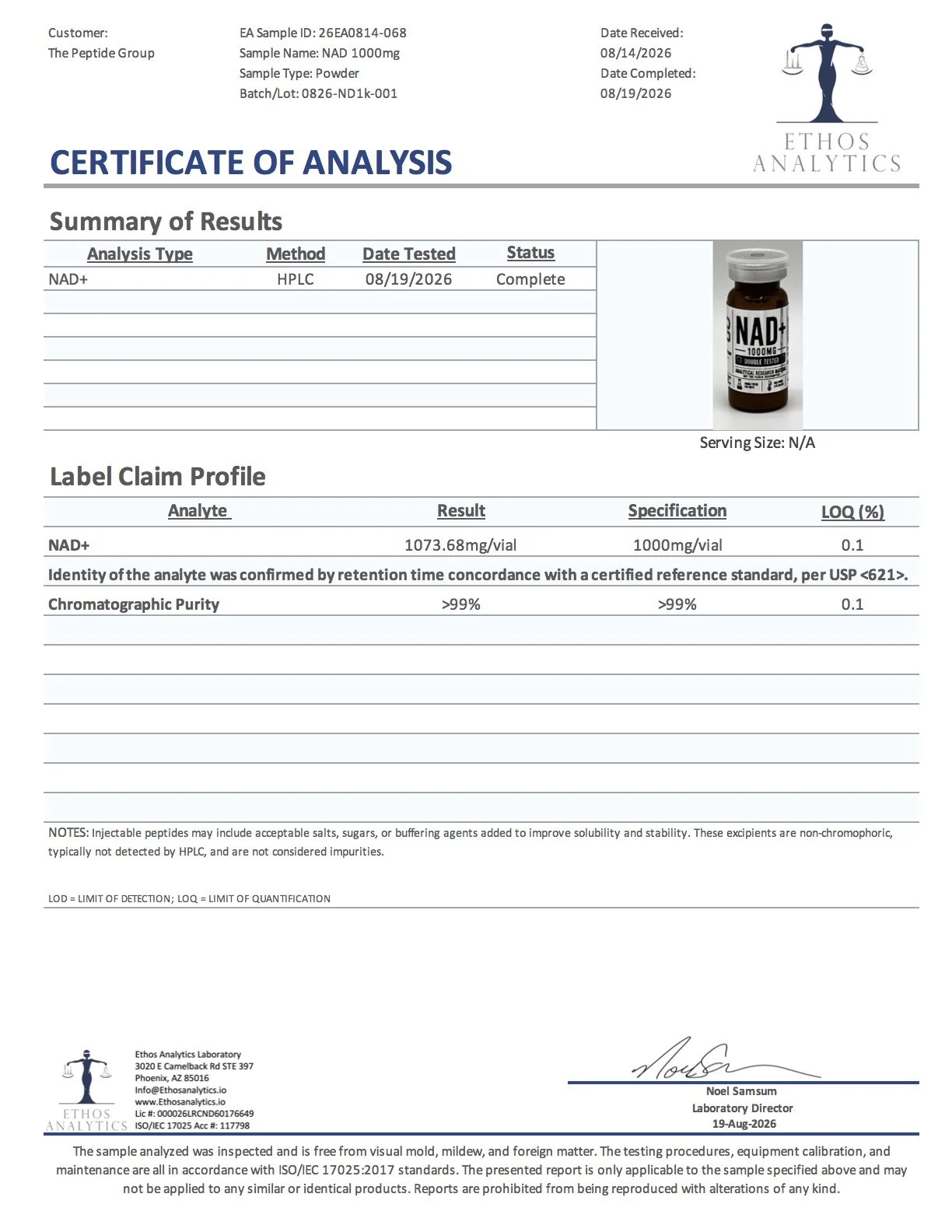 Image 2 of 2
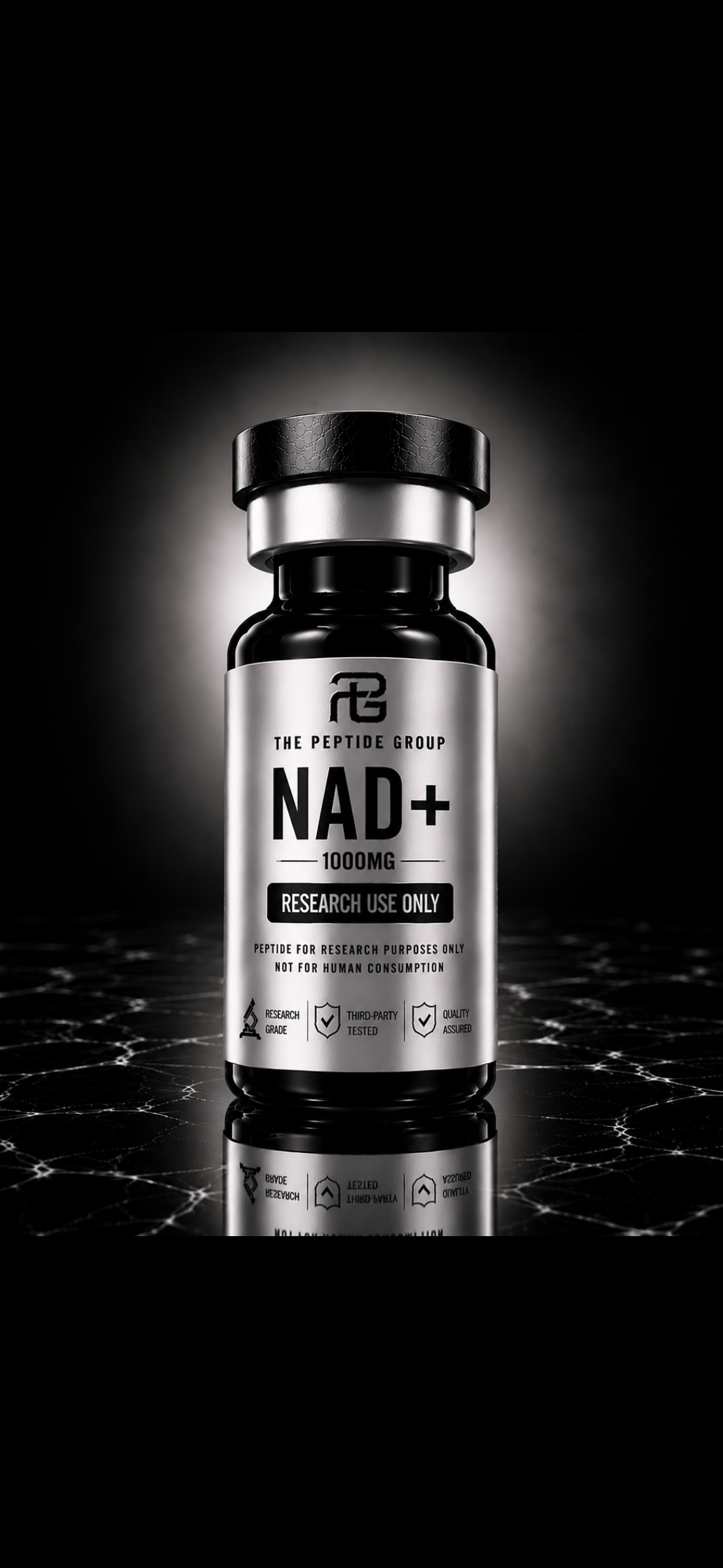
NAD-1000mg Analytical Research Material
NAD+ 1000 mg
Nicotinamide adenine dinucleotide research material for cellular energy and metabolic investigation
NAD+ 1000 mg contains nicotinamide adenine dinucleotide, a naturally occurring coenzyme extensively studied in cellular energy metabolism, mitochondrial bioenergetics, redox reactions, enzyme signaling, and cellular stress-response pathways.
Unlike peptide-based research compounds, NAD+ is a cellular coenzyme that participates directly in fundamental biochemical reactions throughout the cell. Its ability to cycle between oxidized NAD+ and reduced NADH forms makes it central to research involving electron transfer, metabolic reactions, mitochondrial function, and energy production.
NAD+ also serves as a required substrate for several enzyme systems, including sirtuins and poly(ADP-ribose) polymerases (PARPs), creating additional research interest around cellular regulation and DNA-associated signaling.
Each vial contains:
NAD+ — 1000 mg
Total content — 1000 mg
What is NAD+?
NAD+ stands for nicotinamide adenine dinucleotide.
It is a naturally occurring coenzyme present throughout living cells and is involved in numerous biochemical reactions required for normal cellular metabolism.
One of its best-known roles is participation in oxidation-reduction, or redox, reactions.
During these reactions, NAD+ can accept electrons and become NADH. NADH can subsequently transfer those electrons into other biochemical pathways.
This NAD+/NADH redox cycle is fundamental to research involving how cells process nutrients and transfer chemical energy.
NAD+ research commonly examines:
Cellular energy metabolism
NAD+/NADH redox cycling
Mitochondrial bioenergetics
Oxidative metabolism
Electron-transfer reactions
Sirtuin-associated signaling
PARP-associated pathways
DNA-maintenance signaling
Cellular stress responses
Metabolic regulation
NAD+ biosynthesis and salvage pathways
Why is NAD+ researched?
NAD+ occupies a particularly important position in biochemical research because it participates in both cellular energy reactions and enzyme-dependent signaling pathways.
Within cellular metabolism, NAD+ functions as an electron carrier.
Researchers investigate the conversion between NAD+ and NADH to study how cells move electrons through processes involved in nutrient metabolism and mitochondrial energy production.
NAD+ is also required by several families of enzymes.
Sirtuins are NAD+-dependent enzymes investigated in research involving metabolic regulation, cellular stress responses, gene regulation, and mitochondrial biology.
PARPs, or poly(ADP-ribose) polymerases, also consume NAD+ during biochemical processes associated with DNA-damage signaling and cellular maintenance.
Because multiple cellular systems depend on NAD+ availability, researchers study NAD+ in connection with:
energy metabolism, mitochondrial function, redox balance, cellular signaling, enzyme activity, metabolic regulation, and cellular stress biology.
In simple terms, NAD+ provides researchers with a way to investigate one of the biochemical systems connecting nutrient metabolism, cellular energy transfer, and NAD+-dependent enzyme activity.
What makes NAD+ different?
NAD+ differs fundamentally from most peptide research materials because it is not a peptide.
It is a naturally occurring cellular coenzyme with direct involvement in core biochemical reactions.
That creates several distinct areas of research interest:
NAD+/NADH redox cycling
Researchers investigate the transfer of electrons between NAD+ and NADH during metabolic reactions.
Mitochondrial bioenergetics
NAD-linked reactions are integral to research into mitochondrial metabolism and cellular energy production.
Sirtuin-associated pathways
Sirtuins require NAD+ as a substrate, linking NAD+ availability to research involving metabolic and cellular signaling.
PARP-associated pathways
PARP enzymes consume NAD+ during reactions involved in DNA-associated stress and maintenance signaling.
NAD+ metabolism
Researchers examine NAD+ synthesis, consumption, recycling, and salvage pathways to better understand how cellular NAD+ pools are regulated.
Energy transfer. Redox chemistry. NAD+-dependent signaling.
What makes the TPG standard different?
We don’t rely on supplier paperwork alone.
Every TPG batch is built around independent analytical verification, lot-level traceability, and accessible testing documentation.
Where applicable to the analytical methods performed, independent laboratory testing evaluates whether the tested material matches its stated identity, quantity, and purity specifications.
NAD+ — 1000 mg
✓ Batch-specific identification
✓ Quantitative content analysis
✓ Analytical purity testing where performed
✓ Independent third-party laboratory testing
✓ Lot-specific documentation
✓ Certificate of Analysis availability
✓ Cold stored and carefully shipped
The Peptide Group Standard
Supplier documentation tells you what a material is claimed to contain.
Independent analytical testing determines whether the tested sample matches those stated specifications.
That distinction is central to the TPG standard.
We focus on identifiable lots, independent analytical data, and documentation researchers can review rather than relying solely on manufacturer or supplier claims.
Our standard is straightforward:
Identity. Quantity. Purity. Traceability.
Clearly identified material backed by analytical documentation.
Research first. Receipts included.
Product Information
NAD+ 1000 mg is supplied as a single vial of analytical research material.
Lot-specific documentation and Certificate of Analysis information may be provided for applicable batches to support laboratory recordkeeping, material identification, analytical review, and batch traceability.
Specifications
Compound: NAD+
Full name: Nicotinamide Adenine Dinucleotide
Content: 1000 mg per vial
Compound class: Cellular coenzyme
Primary research areas: NAD+/NADH redox cycling, cellular energy metabolism, mitochondrial bioenergetics, sirtuin signaling, PARP-associated pathways
Analytical research material
Batch-specific identification
Independent third-party analytical testing
Certificate of Analysis where applicable
Lot-level traceability
Cold stored and carefully shipped
Research Use Notice
For analytical and laboratory research purposes only.
Not for human consumption. Not intended to diagnose, treat, cure, or prevent any disease.
Manufacturer and supplier information may be redacted from publicly displayed certificates to protect proprietary sourcing information and prevent unauthorized duplication or reuse. Analytical results, purity data, tested content, and reported quantities are not altered by these redactions.
NAD+ 1000 mg
Nicotinamide adenine dinucleotide research material for cellular energy and metabolic investigation
NAD+ 1000 mg contains nicotinamide adenine dinucleotide, a naturally occurring coenzyme extensively studied in cellular energy metabolism, mitochondrial bioenergetics, redox reactions, enzyme signaling, and cellular stress-response pathways.
Unlike peptide-based research compounds, NAD+ is a cellular coenzyme that participates directly in fundamental biochemical reactions throughout the cell. Its ability to cycle between oxidized NAD+ and reduced NADH forms makes it central to research involving electron transfer, metabolic reactions, mitochondrial function, and energy production.
NAD+ also serves as a required substrate for several enzyme systems, including sirtuins and poly(ADP-ribose) polymerases (PARPs), creating additional research interest around cellular regulation and DNA-associated signaling.
Each vial contains:
NAD+ — 1000 mg
Total content — 1000 mg
What is NAD+?
NAD+ stands for nicotinamide adenine dinucleotide.
It is a naturally occurring coenzyme present throughout living cells and is involved in numerous biochemical reactions required for normal cellular metabolism.
One of its best-known roles is participation in oxidation-reduction, or redox, reactions.
During these reactions, NAD+ can accept electrons and become NADH. NADH can subsequently transfer those electrons into other biochemical pathways.
This NAD+/NADH redox cycle is fundamental to research involving how cells process nutrients and transfer chemical energy.
NAD+ research commonly examines:
Cellular energy metabolism
NAD+/NADH redox cycling
Mitochondrial bioenergetics
Oxidative metabolism
Electron-transfer reactions
Sirtuin-associated signaling
PARP-associated pathways
DNA-maintenance signaling
Cellular stress responses
Metabolic regulation
NAD+ biosynthesis and salvage pathways
Why is NAD+ researched?
NAD+ occupies a particularly important position in biochemical research because it participates in both cellular energy reactions and enzyme-dependent signaling pathways.
Within cellular metabolism, NAD+ functions as an electron carrier.
Researchers investigate the conversion between NAD+ and NADH to study how cells move electrons through processes involved in nutrient metabolism and mitochondrial energy production.
NAD+ is also required by several families of enzymes.
Sirtuins are NAD+-dependent enzymes investigated in research involving metabolic regulation, cellular stress responses, gene regulation, and mitochondrial biology.
PARPs, or poly(ADP-ribose) polymerases, also consume NAD+ during biochemical processes associated with DNA-damage signaling and cellular maintenance.
Because multiple cellular systems depend on NAD+ availability, researchers study NAD+ in connection with:
energy metabolism, mitochondrial function, redox balance, cellular signaling, enzyme activity, metabolic regulation, and cellular stress biology.
In simple terms, NAD+ provides researchers with a way to investigate one of the biochemical systems connecting nutrient metabolism, cellular energy transfer, and NAD+-dependent enzyme activity.
What makes NAD+ different?
NAD+ differs fundamentally from most peptide research materials because it is not a peptide.
It is a naturally occurring cellular coenzyme with direct involvement in core biochemical reactions.
That creates several distinct areas of research interest:
NAD+/NADH redox cycling
Researchers investigate the transfer of electrons between NAD+ and NADH during metabolic reactions.
Mitochondrial bioenergetics
NAD-linked reactions are integral to research into mitochondrial metabolism and cellular energy production.
Sirtuin-associated pathways
Sirtuins require NAD+ as a substrate, linking NAD+ availability to research involving metabolic and cellular signaling.
PARP-associated pathways
PARP enzymes consume NAD+ during reactions involved in DNA-associated stress and maintenance signaling.
NAD+ metabolism
Researchers examine NAD+ synthesis, consumption, recycling, and salvage pathways to better understand how cellular NAD+ pools are regulated.
Energy transfer. Redox chemistry. NAD+-dependent signaling.
What makes the TPG standard different?
We don’t rely on supplier paperwork alone.
Every TPG batch is built around independent analytical verification, lot-level traceability, and accessible testing documentation.
Where applicable to the analytical methods performed, independent laboratory testing evaluates whether the tested material matches its stated identity, quantity, and purity specifications.
NAD+ — 1000 mg
✓ Batch-specific identification
✓ Quantitative content analysis
✓ Analytical purity testing where performed
✓ Independent third-party laboratory testing
✓ Lot-specific documentation
✓ Certificate of Analysis availability
✓ Cold stored and carefully shipped
The Peptide Group Standard
Supplier documentation tells you what a material is claimed to contain.
Independent analytical testing determines whether the tested sample matches those stated specifications.
That distinction is central to the TPG standard.
We focus on identifiable lots, independent analytical data, and documentation researchers can review rather than relying solely on manufacturer or supplier claims.
Our standard is straightforward:
Identity. Quantity. Purity. Traceability.
Clearly identified material backed by analytical documentation.
Research first. Receipts included.
Product Information
NAD+ 1000 mg is supplied as a single vial of analytical research material.
Lot-specific documentation and Certificate of Analysis information may be provided for applicable batches to support laboratory recordkeeping, material identification, analytical review, and batch traceability.
Specifications
Compound: NAD+
Full name: Nicotinamide Adenine Dinucleotide
Content: 1000 mg per vial
Compound class: Cellular coenzyme
Primary research areas: NAD+/NADH redox cycling, cellular energy metabolism, mitochondrial bioenergetics, sirtuin signaling, PARP-associated pathways
Analytical research material
Batch-specific identification
Independent third-party analytical testing
Certificate of Analysis where applicable
Lot-level traceability
Cold stored and carefully shipped
Research Use Notice
For analytical and laboratory research purposes only.
Not for human consumption. Not intended to diagnose, treat, cure, or prevent any disease.
Manufacturer and supplier information may be redacted from publicly displayed certificates to protect proprietary sourcing information and prevent unauthorized duplication or reuse. Analytical results, purity data, tested content, and reported quantities are not altered by these redactions.