

 Image 1 of 2
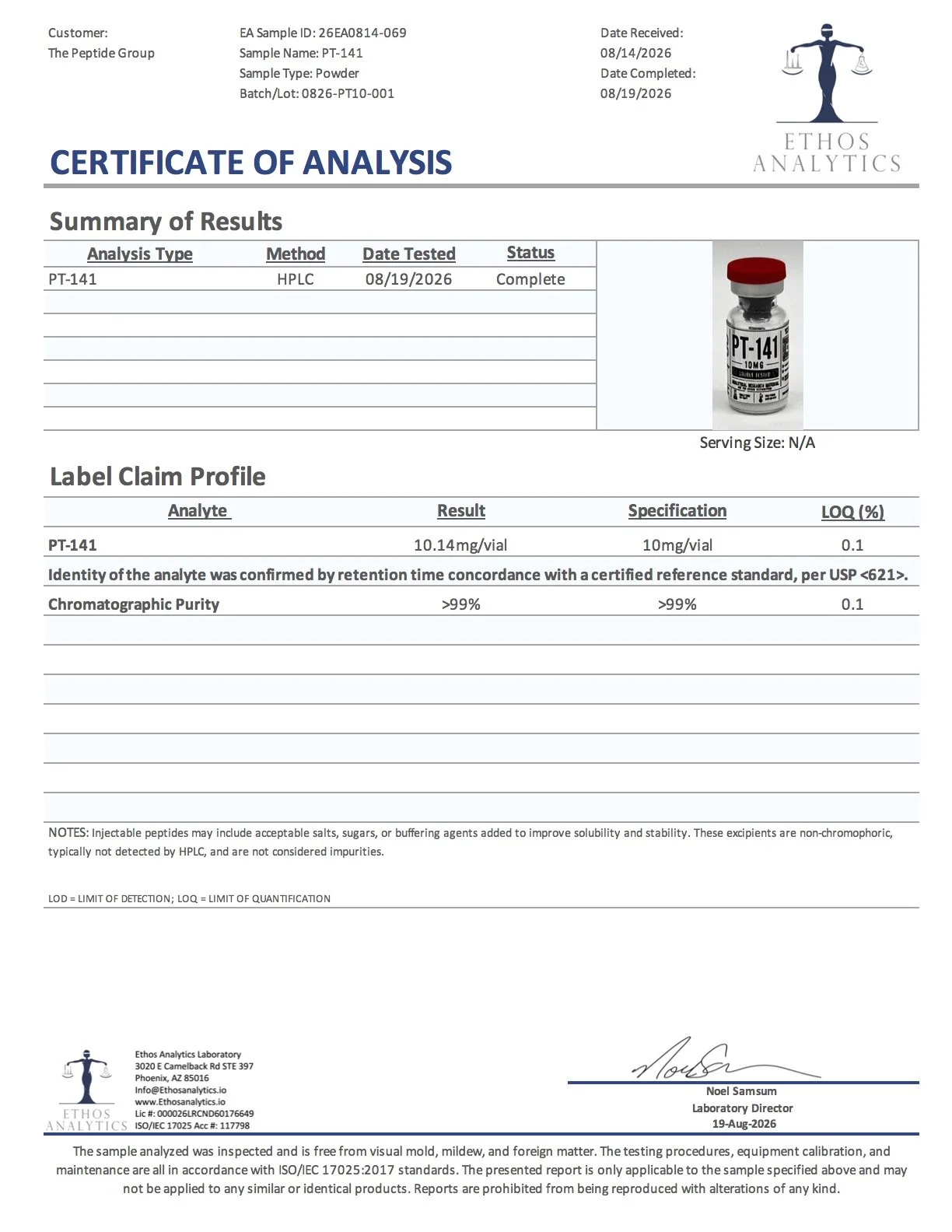 Image 2 of 2
PT-141 10mg Analytical Research Material
PT-141 10 mg
Melanocortin receptor research peptide for central signaling and receptor-pharmacology investigation
PT-141 10 mg, also known as bremelanotide, is a synthetic melanocortin research peptide investigated for its activity within the melanocortin receptor system, particularly signaling associated with MC3R and MC4R receptor pathways.
Unlike research compounds centered primarily on metabolic, incretin, or growth-hormone signaling, PT-141 is studied for its interaction with central melanocortin pathways and receptor-mediated neurological signaling.
Its distinct receptor profile makes PT-141 relevant to research involving melanocortin biology, central nervous system signaling, receptor activation, downstream signaling pathways, and peptide-receptor pharmacology.
Each vial contains:
PT-141 — 10 mg
Total peptide content — 10 mg
What is PT-141?
PT-141, or bremelanotide, is a synthetic peptide analog derived from research involving the melanocortin peptide system.
The melanocortin system consists of multiple receptor subtypes, commonly designated MC1R through MC5R, which participate in different biological signaling pathways.
PT-141 has been investigated primarily for activity involving MC3R and MC4R, two melanocortin receptors associated with central nervous system signaling.
Rather than functioning through the same pathways as compounds designed around peripheral vascular signaling, PT-141 provides researchers with a model for studying centrally mediated melanocortin receptor activation.
PT-141 research commonly examines:
Melanocortin receptor signaling
MC3R receptor activity
MC4R receptor activity
Central nervous system signaling
Peptide-receptor pharmacology
Receptor activation and selectivity
Downstream intracellular signaling
Melanocortin pathway biology
Neuroendocrine signaling
Central behavioral-response pathways
Why is PT-141 researched?
A major area of scientific interest surrounding PT-141 is how melanocortin receptor activation influences centrally mediated signaling pathways.
MC3R and MC4R belong to the broader family of G-protein-coupled receptors (GPCRs).
Activation of these receptors can initiate downstream intracellular signaling cascades, allowing researchers to examine how melanocortin signaling influences communication within neurological and neuroendocrine systems.
PT-141 is therefore studied in research involving:
central melanocortin signaling, receptor pharmacology, neuroendocrine communication, behavioral-response pathways, and GPCR-mediated signaling.
Its research profile is particularly distinct because the compound provides a way to investigate signaling pathways originating primarily within the central nervous system, rather than relying exclusively on peripheral mechanisms.
In simple terms, PT-141 allows researchers to study how activation of specific melanocortin receptors can influence central signaling and downstream biological responses.
What makes PT-141 different?
PT-141 differs from many other peptide research compounds because its primary research interest centers on the melanocortin receptor system.
That creates several distinct areas of investigation:
MC3R signaling
MC3R is studied within melanocortin biology, neuroendocrine signaling, and central regulatory pathways.
MC4R signaling
MC4R is extensively investigated within central melanocortin research and receptor-mediated neurological signaling.
Central receptor activity
PT-141 is studied primarily for centrally mediated signaling rather than as a compound whose research profile depends solely on peripheral vascular pathways.
GPCR pharmacology
Melanocortin receptors are G-protein-coupled receptors, making PT-141 relevant to research involving receptor activation and downstream intracellular signaling.
Melanocortin peptide biology
PT-141 belongs to a research lineage involving synthetic melanocortin analogs and their interactions with melanocortin receptor subtypes.
Melanocortin signaling. Central receptor activity. Distinct peptide pharmacology.
What makes the TPG standard different?
We don’t rely on supplier paperwork alone.
Every TPG batch is built around independent analytical verification, lot-level traceability, and accessible testing documentation.
Where applicable to the analytical methods performed, independent laboratory testing evaluates whether the tested material matches its stated identity, quantity, and purity specifications.
PT-141 — 10 mg
✓ Batch-specific identification
✓ Quantitative content analysis
✓ Chromatographic purity analysis where performed
✓ Independent third-party laboratory testing
✓ Lot-specific documentation
✓ Certificate of Analysis availability
✓ Cold stored and carefully shipped
The Peptide Group Standard
Supplier documentation tells you what a material is claimed to contain.
Independent analytical testing determines whether the tested sample matches those stated specifications.
That distinction is central to the TPG standard.
We focus on identifiable lots, independent analytical data, and documentation researchers can review rather than relying solely on manufacturer or supplier claims.
Our standard is straightforward:
Identity. Quantity. Purity. Traceability.
Clearly identified material backed by analytical documentation.
Research first. Receipts included.
Product Information
PT-141 10 mg is supplied as a single vial of analytical research material.
Lot-specific documentation and Certificate of Analysis information may be provided for applicable batches to support laboratory recordkeeping, material identification, analytical review, and batch traceability.
Specifications
Compound: PT-141
Alternate name: Bremelanotide
Content: 10 mg per vial
Compound class: Synthetic melanocortin research peptide
Primary receptor pathways: MC3R and MC4R
Primary research areas: Melanocortin signaling, central nervous system signaling, GPCR pharmacology, neuroendocrine signaling
Analytical research material
Batch-specific identification
Independent third-party analytical testing
Certificate of Analysis where applicable
Lot-level traceability
Cold stored and carefully shipped
Research Use Notice
For analytical and laboratory research purposes only.
Not for human consumption. Not intended to diagnose, treat, cure, or prevent any disease.
Manufacturer and supplier information may be redacted from publicly displayed certificates to protect proprietary sourcing information and prevent unauthorized duplication or reuse. Analytical results, purity data, tested content, and reported quantities are not altered by these redactions.
PT-141 10 mg
Melanocortin receptor research peptide for central signaling and receptor-pharmacology investigation
PT-141 10 mg, also known as bremelanotide, is a synthetic melanocortin research peptide investigated for its activity within the melanocortin receptor system, particularly signaling associated with MC3R and MC4R receptor pathways.
Unlike research compounds centered primarily on metabolic, incretin, or growth-hormone signaling, PT-141 is studied for its interaction with central melanocortin pathways and receptor-mediated neurological signaling.
Its distinct receptor profile makes PT-141 relevant to research involving melanocortin biology, central nervous system signaling, receptor activation, downstream signaling pathways, and peptide-receptor pharmacology.
Each vial contains:
PT-141 — 10 mg
Total peptide content — 10 mg
What is PT-141?
PT-141, or bremelanotide, is a synthetic peptide analog derived from research involving the melanocortin peptide system.
The melanocortin system consists of multiple receptor subtypes, commonly designated MC1R through MC5R, which participate in different biological signaling pathways.
PT-141 has been investigated primarily for activity involving MC3R and MC4R, two melanocortin receptors associated with central nervous system signaling.
Rather than functioning through the same pathways as compounds designed around peripheral vascular signaling, PT-141 provides researchers with a model for studying centrally mediated melanocortin receptor activation.
PT-141 research commonly examines:
Melanocortin receptor signaling
MC3R receptor activity
MC4R receptor activity
Central nervous system signaling
Peptide-receptor pharmacology
Receptor activation and selectivity
Downstream intracellular signaling
Melanocortin pathway biology
Neuroendocrine signaling
Central behavioral-response pathways
Why is PT-141 researched?
A major area of scientific interest surrounding PT-141 is how melanocortin receptor activation influences centrally mediated signaling pathways.
MC3R and MC4R belong to the broader family of G-protein-coupled receptors (GPCRs).
Activation of these receptors can initiate downstream intracellular signaling cascades, allowing researchers to examine how melanocortin signaling influences communication within neurological and neuroendocrine systems.
PT-141 is therefore studied in research involving:
central melanocortin signaling, receptor pharmacology, neuroendocrine communication, behavioral-response pathways, and GPCR-mediated signaling.
Its research profile is particularly distinct because the compound provides a way to investigate signaling pathways originating primarily within the central nervous system, rather than relying exclusively on peripheral mechanisms.
In simple terms, PT-141 allows researchers to study how activation of specific melanocortin receptors can influence central signaling and downstream biological responses.
What makes PT-141 different?
PT-141 differs from many other peptide research compounds because its primary research interest centers on the melanocortin receptor system.
That creates several distinct areas of investigation:
MC3R signaling
MC3R is studied within melanocortin biology, neuroendocrine signaling, and central regulatory pathways.
MC4R signaling
MC4R is extensively investigated within central melanocortin research and receptor-mediated neurological signaling.
Central receptor activity
PT-141 is studied primarily for centrally mediated signaling rather than as a compound whose research profile depends solely on peripheral vascular pathways.
GPCR pharmacology
Melanocortin receptors are G-protein-coupled receptors, making PT-141 relevant to research involving receptor activation and downstream intracellular signaling.
Melanocortin peptide biology
PT-141 belongs to a research lineage involving synthetic melanocortin analogs and their interactions with melanocortin receptor subtypes.
Melanocortin signaling. Central receptor activity. Distinct peptide pharmacology.
What makes the TPG standard different?
We don’t rely on supplier paperwork alone.
Every TPG batch is built around independent analytical verification, lot-level traceability, and accessible testing documentation.
Where applicable to the analytical methods performed, independent laboratory testing evaluates whether the tested material matches its stated identity, quantity, and purity specifications.
PT-141 — 10 mg
✓ Batch-specific identification
✓ Quantitative content analysis
✓ Chromatographic purity analysis where performed
✓ Independent third-party laboratory testing
✓ Lot-specific documentation
✓ Certificate of Analysis availability
✓ Cold stored and carefully shipped
The Peptide Group Standard
Supplier documentation tells you what a material is claimed to contain.
Independent analytical testing determines whether the tested sample matches those stated specifications.
That distinction is central to the TPG standard.
We focus on identifiable lots, independent analytical data, and documentation researchers can review rather than relying solely on manufacturer or supplier claims.
Our standard is straightforward:
Identity. Quantity. Purity. Traceability.
Clearly identified material backed by analytical documentation.
Research first. Receipts included.
Product Information
PT-141 10 mg is supplied as a single vial of analytical research material.
Lot-specific documentation and Certificate of Analysis information may be provided for applicable batches to support laboratory recordkeeping, material identification, analytical review, and batch traceability.
Specifications
Compound: PT-141
Alternate name: Bremelanotide
Content: 10 mg per vial
Compound class: Synthetic melanocortin research peptide
Primary receptor pathways: MC3R and MC4R
Primary research areas: Melanocortin signaling, central nervous system signaling, GPCR pharmacology, neuroendocrine signaling
Analytical research material
Batch-specific identification
Independent third-party analytical testing
Certificate of Analysis where applicable
Lot-level traceability
Cold stored and carefully shipped
Research Use Notice
For analytical and laboratory research purposes only.
Not for human consumption. Not intended to diagnose, treat, cure, or prevent any disease.
Manufacturer and supplier information may be redacted from publicly displayed certificates to protect proprietary sourcing information and prevent unauthorized duplication or reuse. Analytical results, purity data, tested content, and reported quantities are not altered by these redactions.